A Win for Children, With More Work Ahead: ECPAT Responds to the EU’s Updated Child Sexual Abuse Directive

A Win for Children, With More Work Ahead: ECPAT Responds to the EU’s Updated Child Sexual Abuse Directive
On 22 June, the European Union reached a landmark agreement to better protect children from sexual exploitation and abuse. At a time when the EU is facing a growing child sexual abuse crisis fuelled by emerging forms of abuse facilitated by technology, ECPAT International welcomes this important achievement and the strong message it sends to children, victims, and survivors across Europe.
This agreement follows four years of coordinated advocacy by ECPAT, ECPAT members across Europe, the ECLAG Coalition, survivors, and child rights organisations. Over the years, we have continuously advocated for stronger and more comprehensive protections for children against sexual abuse and exploitation, both online and in-person, working to ensure that children’s rights, survivors’ experiences, and the realities of technology-facilitated abuse were reflected.
What the agreement delivers
The political agreement reflects progress on many of ECPAT’s priorities:
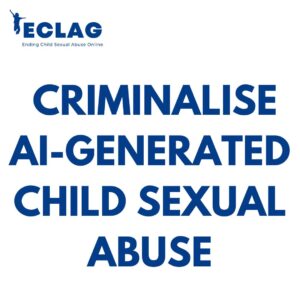
- The inclusion of new offences that reflect the growing role of technology in facilitating harm, including the criminalisation of sexual extortion, livestreamed abuse, AI systems designed or adapted to generate child sexual abuse material, and the operation of online services for the purpose of sexually abusing children.
- An updated definition of child sexual abuse material that broadens its scope to clearly cover AI-generated content (including when produced for personal use) and material depicting additional forms of sexualised abuse.
- Stronger protections for children who have reached the age of sexual consent, including a positive and extensive definition of consent as well as extending protection from grooming in situations of threat, coercion and when the offender pretends to be a peer.
Progress on access to justice
The agreement also delivers historic progress on access to justice. The Directive requires all EU Member States to significantly extend limitation periods—the legal time limits within which a crime can be reported and prosecuted—for child sexual abuse offences. It expressly acknowledges that survivors of child sexual abuse often need years, even decades, before they are able to disclose the harm they have suffered. These new European standards must now pave the way for the complete abolition of limitation periods for child sexual offences across all Member States.
Prevention and protection measures
ECPAT International further welcomes the strengthening of prevention and protection measures, including mandatory criminal record checks for professionals and organised volunteers in direct and regular contact with children, as well as new provisions on awareness-raising, education, training and child safeguarding. These measures recognise that responding to child sexual abuse and exploitation requires not only effective prosecution but also sustained efforts to prevent abuse from occurring in the first place.
What’s still needed
This agreement is a major step forward for child protection, but ECPAT will continue to advocate for what is still missing:
- Multidisciplinary, child-friendly and integrated support services for child victims under one roof, such as the Barnahus model which enables children to access medical, psychological and judicial support in one place.
- Mandate Member States to implement child sexual exploitation and abuse prevention measures.
- Ensuring that children are not criminalised for consensual activities with peers in all EU Member States.
Statement from ECPAT International
“At a time when EU citizens have repeatedly called for stronger protection of children, we applaud EU policymakers for setting high European standards in particular on limitation periods, consent, and the criminalisation of technology-facilitated abuse. This agreement is a powerful reminder of what the EU can achieve when children’s rights guide decision-making. The same ambition must now extend to all policies affecting children and in particular when regulating online platforms’ obligations to prevent, detect and remove child sexual abuse content. Children’s rights are non-negotiable and must remain at the centre of every decision that shapes their lives.” said Isaline Wittorski, Project Lead, and Julie Fuchs, EU Policy and Advocacy Officer at ECPAT International.
What happens next
Technical work on the final text will continue in the coming months. Once adopted, the revised Directive will establish minimum standard across the European Union. ECPAT encourages Member States to build on this foundation by adopting more ambitious national measures. Effective implementation, adequate resources, strong safeguarding systems and survivor-informed policies will be essential to ensure that every child benefits from the protections envisioned by the Directive.
ECPAT International stands ready to support Member States, European institutions, civil society partners and survivors in turning this landmark agreement into lasting progress for children.
Together, we can build child protection systems that prevent abuse, support healing and ensure that every child can grow up free from sexual violence and exploitation.
Similar news and stories
-

- Online & Tech-Facilitated
- Statements and Press Releases
A Win for Children, With More Work Ahead: ECPAT Responds to the EU’s Updated Child Sexual Abuse Directive
-

- Gender Dimensions
- Online & Tech-Facilitated
- Private Sector Engagement
- Statements and Press Releases
How civil society and digital communication platforms can collaborate to support healthier online experiences for teen gamers
-

- Gender Dimensions
- Online & Tech-Facilitated
- Private Sector Engagement
- Statements and Press Releases
Discord announces partnership with child protection NGO ECPAT International to support teen users
-

- Online & Tech-Facilitated
- Statements and Press Releases
This is no April Fool’s joke: Europe is switching its detection of child sexual abuse online off
-

- Online & Tech-Facilitated
- Statements and Press Releases
Joint Call on European Parliament to Allow the Continuation of Current Child Sexual Abuse Detection Practices
-
- Justice
- Online & Tech-Facilitated
- Statements and Press Releases
- Travel & Tourism
Joint Statement Calling upon Governments to Step Up Extraterritorial Cooperation to End the Sexual Exploitation of Children
-
- Online & Tech-Facilitated
- Statements and Press Releases
Open Letter: Protect Children’s Online Safety in Europe
-
- Online & Tech-Facilitated
- Statements and Press Releases
ECPAT International Statement on Social Media Bans for Children
-
- Gender Dimensions
- Online & Tech-Facilitated
- Private Sector Engagement
- Statements and Press Releases
Joint Reaction from ECLAG and DOT Europe on European Parliament vote on Directive to combat child sexual abuse
-
- Gender Dimensions
- Online & Tech-Facilitated
- Private Sector Engagement
- Statements and Press Releases
Groundbreaking Case Study Launched: A Model for Sustainable Tourism with Child Protection at its Core